After Welcome
By: Lindsay Armstrong (Executive Director, NCDC)
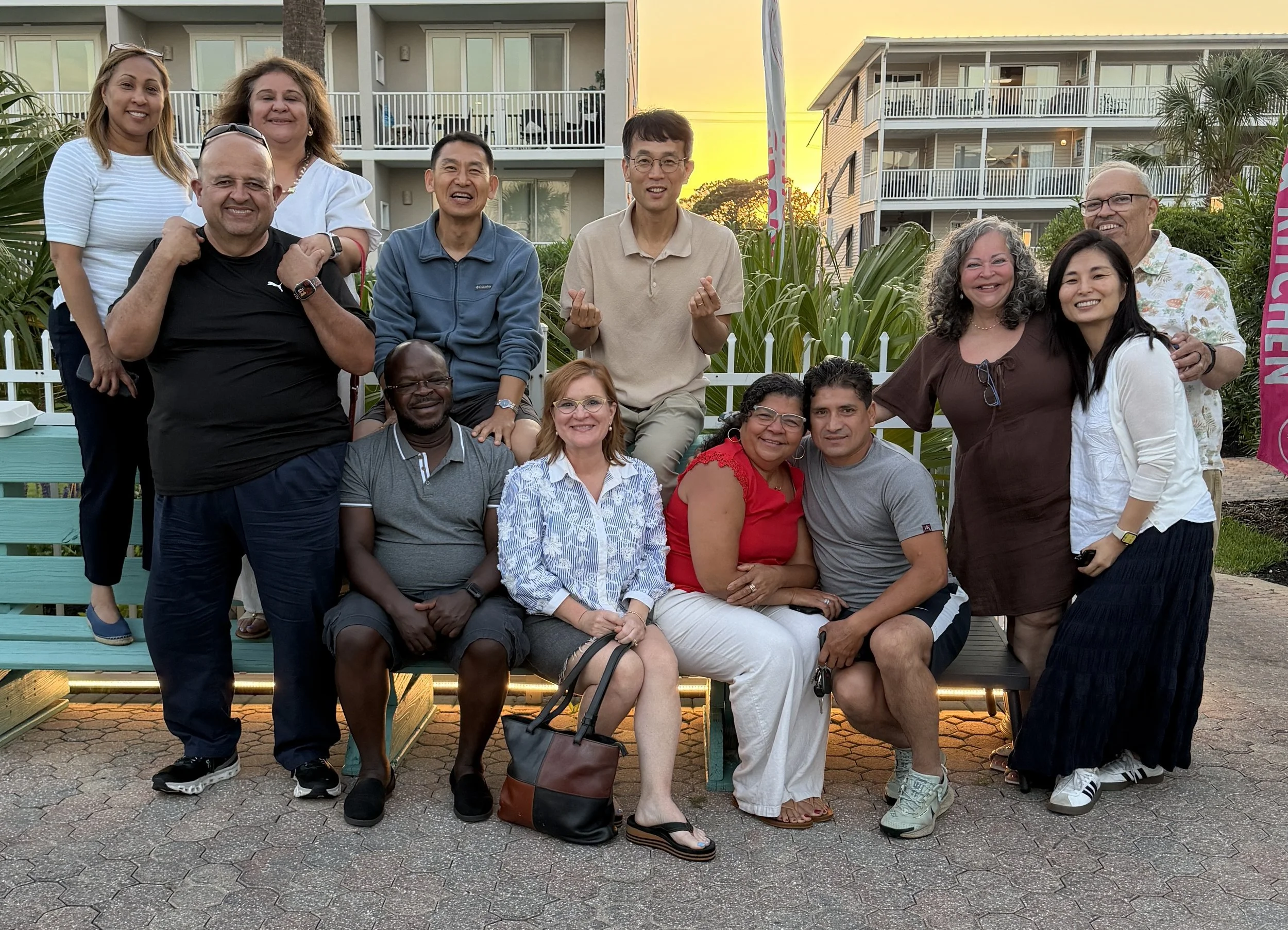
This summer, I found myself sitting at table with a group of new worshiping community leaders born in different countries, speaking different first languages, leading communities that look very little like one another.
There was food, of course. There is almost always food when NCDC gathers. This time there was Guaraná from Brazil, Binggrae banana milk from South Korea, and Fufu from Ghana. Plus, classic U.S. cheeseburgers. (Don’t worry Jimmy Buffet fans! I like mine with lettuce and tomato, Heinz 57 and French friend potatoes…)
But what I remember most is the ease of the room. People laughed. Leaders lingered. Stories wandered. The room bounced between sharp ribbing and sincere wisdom. There was even dancing. People who had once arrived at a NCDC gathering knowing almost no one now had history together.
I remember looking around and thinking: This is what we keep trying to create.
Not an event. Not a network. Something harder to name.
Belonging.
We as the church talk a lot about welcome. We should. Because of the remarkable, freely given welcome we’ve received in Jesus Christ, we put energy into hospitality, noticing the newcomer, opening the door, learning names, and making sure someone knows where to sit and where the bathroom is. Across all kinds of new and old congregations alike, I see people working hard to make room for others and to communicate, in countless ways, you are welcome here.
But lately I have been realizing that welcome is actually the easier part.
Because you can be warmly welcomed and still not belong.
You can attend worship every Sunday and not belong. You can be on the newsletter list, show up for the event, have a particular pew to sit in, even serve on a committee, and still wonder whether your presence really matters.
So what changes when welcome becomes belonging?
I find myself noticing clues in many of the communities and relationships I encounter through NCDC.
Belonging grows when someone knows more than your name. When your story becomes part of the community's story. When your gifts are needed, not simply appreciated. When you can bring something of yourself that shapes the community rather than simply learning how to fit into what was already there.
And perhaps most importantly, belonging becomes visible when your absence leaves a hole.
There is something deeply Christian in that. Paul reached for the image of a body: many members, different gifts, each necessary to the whole. I don't think that image is primarily about getting everyone signed up for a job. It is a vision of people becoming so connected that we cannot quite be ourselves without one another.
That is different from welcome.
Welcome says, We're glad you're here.
Belonging eventually says, We aren't quite the same without you.
Across Greater Atlanta, I get to see communities exploring what that can look like in very different settings. Sometimes it happens around a table. Sometimes through worship or prayer. Sometimes through shared work or responsibility. Sometimes it begins when people discover that they can bring their language, culture, identity, questions, children, ailing parents, hurting friends, doubts, food, music, or whole complicated selves into a community without leaving the most important parts at the door.
None of our communities gets this right all the time. NCDC doesn't either.
But I am increasingly convinced that this is one of the most important questions facing the church right now. In a world full of people who are connected to almost everything and still profoundly hungry to be known, perhaps welcome is no longer an ambitious enough goal.
What would change if we became as intentional about cultivating belonging as we have learned to be about offering welcome?
I think that question is worth carrying with us into the fall.